Dogs
Jan 16, 2026
Feeding your dog is one of the most important decisions you'll make as a pet parent. In Dubai's warm climate, choosing the right food isn’t just about nutrition. It is about keeping your dog healthy, energetic, and thriving every day.
Raw dog food has surged in popularity among owners seeking a natural approach. But before you make the switch, it is important to understand that it comes with significant risks and safety considerations.
This guide will help you navigate raw feeding with confidence and care, so you can make informed choices that support your dog’s health, happiness, and overall wellbeing.
Could a raw diet be the right choice for your dog, or might it carry risks you haven’t considered?
What Is Raw Dog Food?
Unlike commercial pet foods, raw diets are uncooked, which means bacteria are not eliminated if not prepared or stored properly. Raw chicken or beef stays in its natural state, appealing to owners who want to mimic what wild canines ate.
Raw dog food typically contains:
Raw muscle meat
Bones
Organ meats
Vegetables
Fruits
Supplements for nutritional balance
Domestic dogs have evolved with humans over thousands of years, so not all dogs may thrive on a strictly raw diet. Dogs with sensitive digestion or certain breeds might require extra care or adjustments when following a raw feeding plan.
Different Approaches to Raw Feeding
Raw diets are usually fed in two main ways:
BARF (Biologically Appropriate Raw Food)
Combines meat, organs, bones, and some vegetables for balanced nutrition. It provides essential protein, fats, and vitamins to support overall health. Many owners use BARF to ensure their dog gets a mix of natural nutrients while keeping meals varied.
PMR (Prey Model Raw)
Focuses on meat, bones, and organs to mimic whole prey. This approach emphasizes natural protein and fat while minimizing plant matter. It closely reflects what wild canines eat and aims to replicate a more instinctual diet.
Benefits of Raw Feeding
Many pet owners choose raw diets because they aim to provide a more natural, preservative-free approach to feeding. When planned carefully, raw feeding can offer several health benefits for dogs:
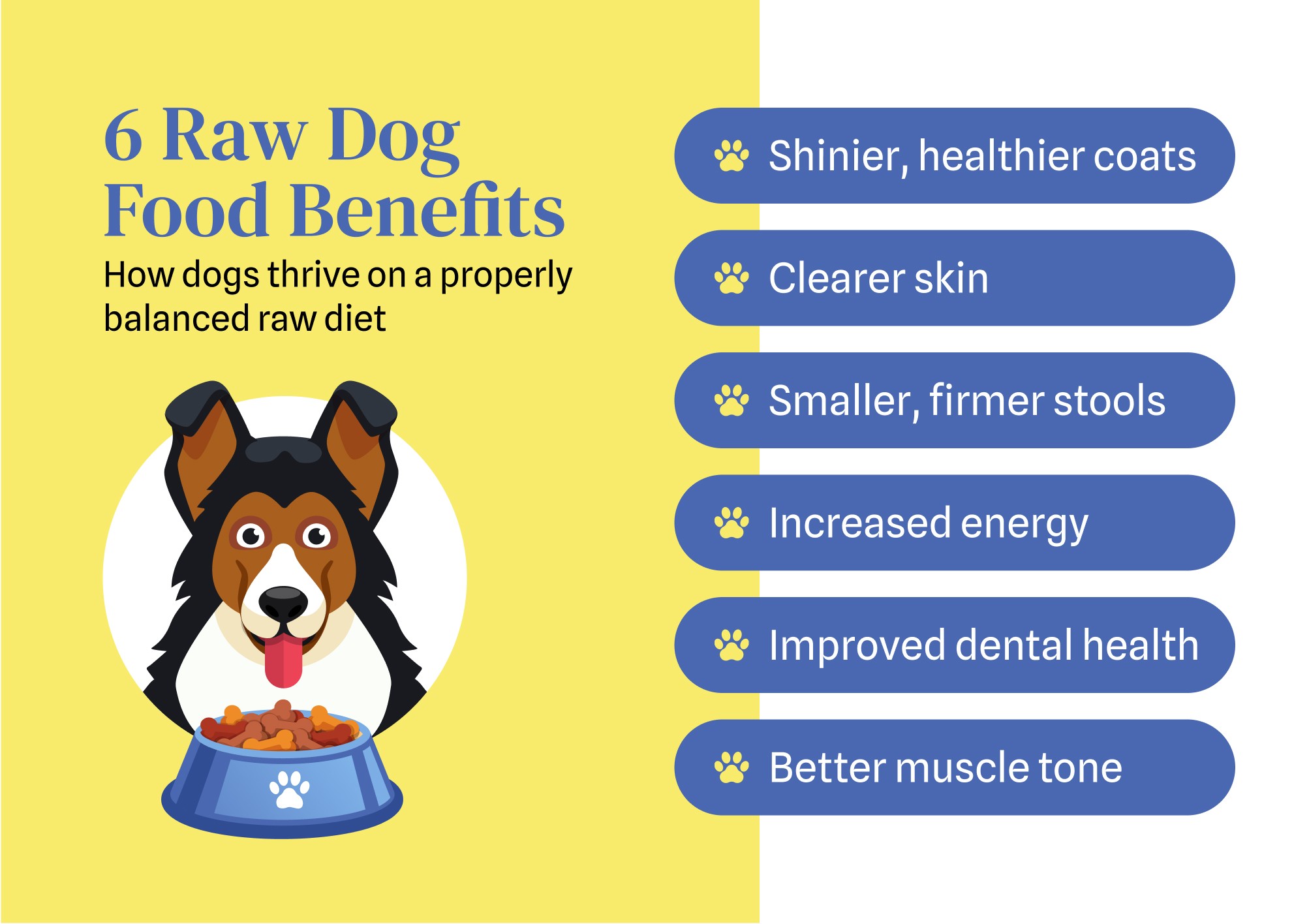
Shinier, Healthier Coats
Raw diets provide natural fatty acids from meat and organs, plus nutrients like omega-3, omega-6, vitamin E, and zinc, supporting skin health and a glossier coat over time.
Clearer Skin
Removing artificial additives and highly processed ingredients may reduce skin irritation in some dogs. A well-formulated raw diet can support skin barrier health and reduce dryness or flakiness.
Smaller, Firmer Stools
Raw diets are typically higher in digestible animal protein and lower in unnecessary fillers. This can result in better nutrient absorption and less waste, leading to smaller, more compact stools.
Increased Energy Levels
Raw feeding provides easily digestible protein and fat, helping dogs maintain steady energy throughout the day and during activity.
Improved Dental Health
Chewing raw meaty bones can help mechanically remove plaque from teeth. This natural chewing action may support oral hygiene when bones are selected and offered safely.
Better Muscle Tone
High-quality animal protein supports muscle development and maintenance. This can be particularly beneficial for active dogs that require sustained strength and mobility.
While some dogs thrive on raw diets, many benefits can also come from balanced cooked or commercial diets without added food safety risks.
Potential Risks Associated With Raw Dog Food
Raw feeding can offer benefits for dogs, but it requires careful planning and attention. Without proper safety precautions, dogs may face the risks outlined below.
Bacterial Contamination
Raw meat can naturally contain bacteria such as:
Salmonella
E. coli
Listeria
With proper food handling, storage, and hygiene, risks can be minimized. Consulting a veterinarian can help determine if a raw diet is suitable for your dog and household.
Nutritional Imbalance
A balanced diet requires precise ratios of protein, fat, vitamins, and minerals. Homemade raw diets frequently:
Lack essential nutrients
Contain incorrect proportions of calcium and phosphorus
These imbalances can compromise bone health and overall wellbeing. Professional veterinary guidance is essential to prevent long-term health issues.
Bone-Related Risks
Raw bones present choking hazards and can cause:
Broken teeth
Intestinal blockages
Dangerous perforations
While larger dogs generally handle raw bones more safely than small breeds, risks exist across all sizes.
Watch for warning signs, including vomiting, diarrhea, or lethargy, which may indicate your dog isn’t tolerating the diet. Contact your veterinarian if you notice unusual behavior or appetite changes.
Ideal Portions of Raw Dog Food
These percentages are commonly used in raw feeding, but every dog is unique. Portions may need adjustment based on activity, age, or weight, and it’s always best to check with your veterinarian.
Ingredient | % of Daily Meal | Notes |
Muscle meat | 70 to 80% | Main source of protein and energy; common choices include chicken, beef, or lamb. |
Raw edible bone | 10% | Provides calcium and phosphorus; ensure bones are safe and appropriate for your dog. |
Organ meat | 10% | Include 5% liver and 5% other organs to supply essential vitamins and minerals. |
Vegetables / fruits / supplements | 5 to 10% | Optional, added to provide extra nutrients and variety in the diet. |
These feeding guidelines align with recommendations from the Merck Veterinary Manual on dog nutrition, highlighting key dietary components and nutrient balance needed for healthy growth and maintenance.

Essential Feeding Guidelines for Raw Dog Diets
If you decide to pursue raw feeding, implementing rigorous hygiene and safety protocols is non-negotiable.
Follow Safe Handling Practices
Treat raw dog food with the same caution as raw meat for human consumption. Wash hands, countertops, and utensils thoroughly with hot, soapy water after handling. Use separate cutting boards, bowls, and utensils exclusively for your dog's food to prevent cross-contamination.
Be Mindful of Proper Storage
Store raw dog food in sealed, leak-proof containers in the refrigerator or freezer. Thaw frozen meals on a tray away from human food and discard any left at room temperature for more than 30 minutes.
In Dubai’s heat (often 40°C+), bacteria multiply rapidly. Never leave raw food in your car or outside. Transport frozen food in cooler bags with ice packs, and use thawed food within 24 hours.
Room temperature storage should not exceed 30 minutes. Refrigerated thawed food can last 24 to 48 hours, while properly frozen raw food can last up to six months.
Determine Serving Sizes
Daily raw food portions depend on your dog’s weight and activity. Most adult dogs need 2 to 3% of their body weight per day, while active dogs may need 3 to 4%. Puppies require 5 to 10%, split into multiple meals. Adjust portions based on age, activity, and health, and consult a veterinarian to ensure balanced nutrition.
Prepare Raw Meals in Batches
Prepare raw meals in batches for the week and freeze them in portioned containers to save time and maintain safety. Label each container with the date and contents so you can easily track freshness.
Keep Your Dogs Hydrated
Raw diets contain approximately 70% moisture, but in Dubai’s dry, hot climate, dogs still need constant access to fresh, clean water. Monitor water intake closely, especially during summer months, to help prevent dehydration and reduce the risk of heat-related illnesses such as dog heat stroke.
Consult Your Veterinarian
Before transitioning to raw feeding, schedule a consultation with your veterinarian. They can assess whether the diet meets your dog's nutritional needs and advise on alternatives if your dog is very young, elderly, or has underlying health conditions.
Raw Dog Food in Daycare and Boarding Facilities

If your dog attends our daycare or boarding facilities, clear communication about their diet is essential:
Inform our care crew if your dog eats raw food
Provide detailed feeding instructions
Confirm hygiene protocols for handling
Ensure thorough cleaning after meals to protect all dogs from contamination
Is Raw Dog Food Right for Your Dog?
The suitability of raw feeding depends on your dog's age, health status, activity level, and your ability to prepare and handle food safely every day. Here are the critical questions to ask before starting:
Has your veterinarian reviewed and approved your feeding plan?
Can you safely handle and store raw food daily?
Does your dog tolerate raw food without digestive upset?
Are there no vulnerable individuals in your household (young children, elderly, immunocompromised)?
If you answered "no" to any question, a high-quality cooked or commercial diet likely represents a safer choice. Modern premium dog foods are scientifically balanced to meet all nutritional requirements while eliminating bacterial risks.

Raw Dog Food vs Kibble: Making the Right Choice
Raw dog food can be appealing because it feels natural, but it comes with challenges. Safety, proper nutrition, and careful handling are essential, and guidance from your veterinarian helps. Every dog is unique, so the goal is a feeding plan that keeps them healthy, happy, and thriving while reducing risks.
Remember, thoughtful choices, hygiene, and expert advice form the foundation for safe, joyful moments with your dog.
If you’d like guidance tailored to your dog’s needs, our on-site veterinarian visits our Doggy daycare every Friday. You can also stop by to see how we support your dog’s health and happiness.