Dogs
Feb 20, 2026

When was the last time you checked your dog’s teeth?
Between walks, playtime, and grooming, dental care often slips down the list. Yet plaque begins building up within hours, and without regular dog dental cleaning, it can lead to sore gums, bad breath, and hidden discomfort that many dogs quietly tolerate.
The good news is that caring for your dog’s mouth does not need to be complicated. With a simple pet dental routine and the right support, you can protect their health, keep their breath fresh, and help them stay happy for years to come.
This guide walks you through the signs to watch for, simple at-home habits, and when professional care may be needed, so you can confidently look after your dog’s smile.
Why Dog Dental Cleaning Matters
Plaque forms on your dog’s teeth within hours of eating. If it is not removed, it hardens into tartar, irritates the gums, and can lead to infection.
As gum disease progresses, bacteria may enter the bloodstream and affect vital organs such as the heart, kidneys, and liver. What starts in the mouth can quickly impact the whole body.
Dental disease is also extremely common. Around 80 percent of dogs over the age of three show signs of it, yet most cases are preventable with regular dog dental cleaning and consistent pet dental care.
Beyond fresh breath, the real benefit is comfort. Healthy teeth mean pain-free eating, better energy, and a happier dog.
Recognising Dental Problems Early
A quick look inside your dog’s mouth each week can tell you a lot about their pet dental health. Here are a few signs worth noticing.
In the Mouth
Yellow or brown build-up on teeth
Red, swollen, or bleeding gums
Loose or missing teeth
Strong or unusual breath
In Their Behaviour
Chewing on one side only
Dropping food or avoiding hard kibble
Less interest in toys or play
Other Physical Clues
Excessive drooling
Pawing at the mouth
Swelling around the face or jaw
If you notice any of these changes, a professional check-up can help address the problem before it becomes painful or serious.
At-Home Dog Dental Cleaning
Consistent care at home is the simplest and most effective way to protect your dog’s teeth. Think of professional cleaning as the deep clean, while your everyday routine keeps plaque from building up in the first place.
Start With Brushing
Brushing remains the gold standard for dog dental cleaning. Even a few minutes several times a week makes a noticeable difference.
Use dog-safe toothpaste only
Choose a soft brush or finger brush
Focus gently along the gum line
Keep sessions short, calm, and positive
Aim for daily brushing or at least 3 to 4 times a week
With patience and praise, brushing quickly becomes part of your normal bonding time rather than a chore.

Add Supportive Tools
Chews and toys can help reduce plaque between brushes, but they work best alongside brushing, not as a replacement.
Look for enzymatic dental chews approved by the Veterinary Oral Health Council.
Other helpful options include:
Crunchy kibble
Raw carrots (supervised)
Textured toys designed for dental health
Avoid very hard chews or cooked bones, which may crack or damage teeth.
Support With Good Nutrition
A balanced diet also plays a role in strong teeth and healthy gums. Quality ingredients and proper minerals support overall pet dental health. If your dog has existing issues, your vet can recommend a diet that suits their needs.
Professional Dog Dental Cleaning
Even with consistent brushing at home, some plaque and tartar still build up in hard-to-reach spots. That’s where a professional pet dental cleaning can make a real difference.
Your vet performs a full oral exam and uses specialised tools to gently remove buildup above and below the gum line. This helps protect teeth, soothe irritated gums, and prevent small issues from turning into painful problems.
What Happens During a Visit
Complete mouth check
Plaque and tartar removal
Teeth polishing
Gum health assessment
Safe anaesthesia with pre-care screening
Most dogs recover quickly and are back to their normal, happy selves the same day. A little rest and soft food for a day or two is usually all that’s needed.
Think of professional cleaning as your dog’s reset button, while your daily routine keeps that healthy smile going strong.

Building a Long-Term Dental Care Routine
Great dental health is not a one-time fix. It’s a simple routine that grows with your dog through every life stage.
Age-Based Care
Dental needs change as your dog grows. Puppies benefit from gentle mouth handling and short brushing sessions early on, helping them see dental care as a normal and positive part of everyday life. Building this comfort early makes future dog dental cleaning much easier for both of you.
As adults, consistent home care and regular check-ups keep plaque under control and prevent hidden issues. In their senior years, dogs may need closer monitoring for gum sensitivity or loose teeth, with a little extra support to keep eating, playing, and cuddling comfortably.
A Simple Weekly Rhythm
Care step | How often |
Brushing | Daily or 3 to 4 times per week |
Quick gum check | Weekly |
Professional dental assessment | Once a year or as recommended |
Small habits add up. Keep sessions calm and positive, use quality tools, and reward your dog afterwards. Even a few minutes of care each week helps protect their smile for years to come.
Common Mistakes to Avoid
Even with the best intentions, small habits can slow your dog’s progress. To keep your dog dental cleaning routine safe and effective, try to avoid:
Using human toothpaste
Waiting for bad breath before taking action
Relying only on treats or chews
Skipping the back teeth where plaque builds fastest
Brushing too hard or rushing the process
Gentle, consistent care always works better than occasional deep cleans. Slow and steady keeps your dog comfortable and protects their gums.
Benefits of Healthy Teeth
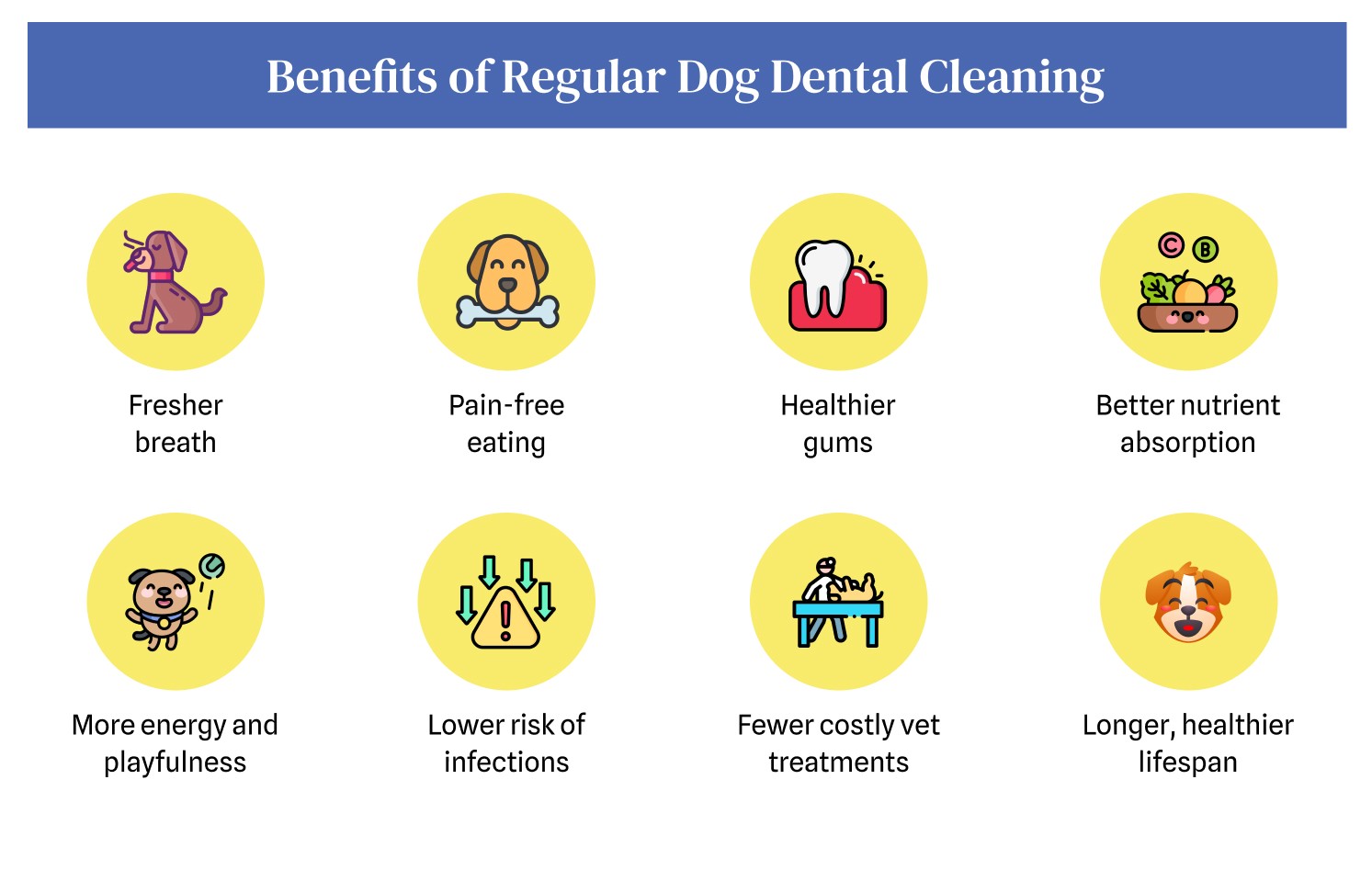
Good pet dental care does more than freshen breath. It helps your dog feel comfortable, confident, and ready to enjoy everyday life.
With healthy teeth, you may notice:
Pain-free eating and easier chewing
Better digestion and nutrient absorption
More energy for walks and playtime
Greater focus during training
Fewer unexpected dental treatments or vet visits
A healthy mouth supports a happier dog, and that means more tail wags, closer cuddles, and brighter smiles all around.
Supporting Your Dog’s Dental Health for Life
Looking after your dog’s teeth is one of the simplest ways to protect their comfort and overall wellbeing. A consistent dog dental cleaning routine at home, supported by professional care when needed, helps prevent pain, supports healthy eating, and keeps everyday moments joyful.
Those small habits add up over time. A quick brush, a gentle check, or a regular dental visit can mean more energy, easier meals, and many more years of tail wags, cuddles, and bright, happy smiles.
We believe every dog deserves to feel comfortable, confident, and cared for, right down to the smallest details of their health.