Pets
Feb 11, 2026

You’ve just welcomed an adorable puppy or kitten into your home. Toys are everywhere, tiny paws are racing across the floor, and life suddenly feels a little brighter. Then your vet gently asks an important question.
“Have you thought about pet neutering?”
It’s normal to feel unsure. When is the right time? Is it safe? Will it change your pet’s personality?
If you’re navigating these decisions as a pet parent in Dubai, you’re not alone. Pet neutering, and pet spay for females, are among the most common veterinary procedures, yet they’re often misunderstood. This guide explains everything clearly and calmly, so you can make confident, informed decisions with your veterinarian.
What Is Pet Neutering and Spaying
Pet neutering is a routine surgical procedure that prevents your cat or dog from reproducing. Your vet removes the testicles in males, while a pet spay removes the ovaries and usually the uterus in females.
Although it may sound serious, these are quick, routine procedures that vets perform safely under general anaesthesia. Most surgeries take less than an hour, and your pet usually comes home the same day.
With a clean recovery space and a little rest, many pets bounce back within one to two weeks.
Beyond preventing unwanted litters, pet neutering can support better health, calmer behaviour, and a more comfortable life for both you and your companion.

Best Age to Neuter Cats and Dogs
Timing matters when it comes to pet neutering. But there isn’t one perfect age for every pet.
Your companion’s breed, size, growth rate, and lifestyle all play a role. Some pets benefit from earlier procedures, while others, especially larger dogs, may do better if you wait a little longer.
A quick chat with your vet can help you choose the safest timing for your pet.

Neutering Age for Dogs
Dogs grow at different rates depending on their breed and size. Smaller dogs mature quickly, while larger breeds need more time for their bones and joints to fully develop, which can affect the ideal timing for pet neutering.
Breed Size | Recommended Age | Example Breeds | Notes |
Small (under 20 kg) | Around 6 to 9 months | Maltese, Chihuahua, French Bulldog | Reach maturity earlier |
Medium (20 to 40 kg) | Around 9 to 12 months | Cocker Spaniel, Border Collie | Moderate growth rate |
Large or giant (over 40 kg) | Often after 12 months, depending on breed | Labrador, Golden Retriever, German Shepherd | Longer bone and joint development |
Studies suggest that waiting a little longer to neuter some large and giant breeds may reduce the risk of joint and orthopaedic issues. Because every dog grows differently, speak with your Dubai-based vet to choose the safest timing for your pet’s breed, size, and lifestyle.
Neutering Age for Cats
Cats mature earlier than dogs, so neutering typically happens sooner. Most vets recommend spaying or neutering between 4 and 6 months, although rescue kittens may be safely treated from 8 weeks.
Female cats: Spaying before the first heat cycle offers the strongest protection against mammary tumours and prevents unexpected litters.
Male cats: Early neutering helps reduce spraying, roaming, and territorial behaviour around the home.
Indoor cats: Neutering often leads to a calmer, more settled companion, which suits apartment living and Dubai’s warm climate.
With the right timing, most cats recover quickly and settle into happy, relaxed routines at home.
Health and Behavioural Benefits of Neutering
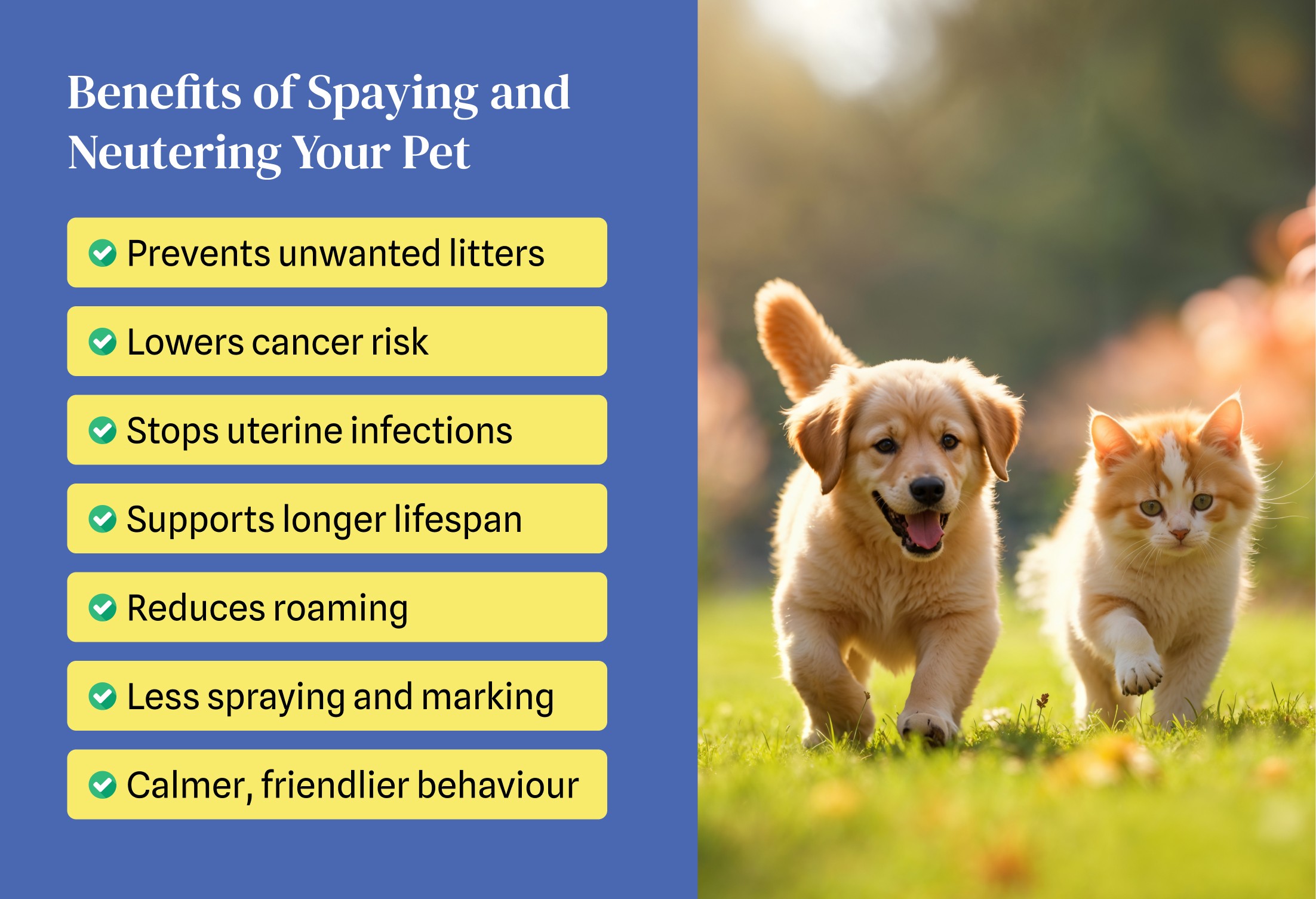
Pet neutering does more than prevent unwanted litters. It plays an important role in both your pet’s health and behaviour, with benefits you’ll notice every day at home with your pet.
Health Benefits
Here’s how pet neutering can support your pet’s health over the years:
Cancer Protection
Neutering removes the risk of testicular cancer in males. Spaying females before the first heat can reduce mammary tumour risk by up to 90 percent, according to research in the Journal of Small Animal Practice.
Prevents Pyometra
Spaying completely eliminates the chance of this serious uterine infection. Without surgery, pyometra often requires emergency treatment and can become life-threatening.
Supports Prostate Health
Neutered male dogs are less likely to develop prostate enlargement or infections. This often means fewer discomforts and fewer vet visits as they grow older.
Longer Lifespan
Neutered pets often live one to three years longer on average. Fewer health complications and safer behaviour patterns help them enjoy more happy, active years by your side.
Behavioural Benefits
You may also notice positive changes in how your pet behaves day to day, especially at home or around other animals.
Less Roaming
Pets are more likely to stay close to home. This lowers the risk of traffic accidents or getting lost while exploring.
Calmer Temperament
Reduced territorial and same-sex aggression can make life easier in multi-pet households and social spaces like parks. Many pets feel more relaxed and settled.
Less Marking
Male cats spray less and male dogs are less likely to mark indoors. Your home stays cleaner and more comfortable for everyone.
Better Socialisation
Many neutered dogs become more adaptable and easy-going. This helps them enjoy daycare, grooming visits, and group settings.
No Heat Cycles
Female pets avoid the restlessness, vocalising, and behavioural changes that come with being in heat, creating a calmer indoor routine.
For families in apartments or villas, these small changes often add up to a more peaceful, safer home for both pets and people.
Possible Risks to Keep in Mind
While pet neutering offers many benefits, it’s still important to understand the possible risks so you can make confident, informed decisions with your vet.
Anaesthesia Concerns
Modern anaesthesia is very safe for healthy pets, and complications are uncommon. Older pets or those with existing medical conditions may need extra checks beforehand.
Surgical Risks
As with any operation, mild swelling, bleeding, or infection can occasionally occur. Choosing an experienced veterinary team and following aftercare advice helps minimise these risks.
Weight Changes
Some pets may gain weight after surgery due to a slower metabolism. Regular exercise and balanced meals usually keep this easily under control.
Timing for Large Breeds
Neutering very early may affect bone and joint development in some large dogs. Your vet can guide you on the safest age based on breed and size.
Minor Hormonal Changes
A small number of pets may experience subtle coat or energy changes, though these are usually temporary.
With proper preparation and aftercare, most pets recover quickly and return to their normal, playful routines within days.
What to Expect During Neutering and Recovery
Knowing what happens before and after pet neutering can help you feel prepared and keep your furry friend comfortable every step of the way.

Before Surgery
Fasting: Your vet will usually ask you to stop food for 8 to 12 hours before surgery to keep anaesthesia safe.
Comfort items: Bring a favourite toy or blanket to help your pet feel calm and secure.
Care planning: Talk with your vet about pain relief, medications, and home care so you know exactly what to expect.
After Surgery: Recovery Timeline
Day | What you may notice |
1 to 2 | Sleepiness or mild disorientation is normal. Keep your pet resting in a quiet, cool space indoors. |
3 to 7 | Energy slowly returns. Check the incision daily for redness or swelling and give medications as directed. |
10 to 14 | Healing is usually complete. Limit jumping or rough play until your vet confirms it’s safe to resume normal activity. |
Indoor recovery is especially important in Dubai, where heat and dust can affect healing. With a little rest and care, you’ll likely see your pet bounce back quickly and return to their happy, playful self in no time.
Making the Right Pet Neutering Decision for Your Pet
This procedure is a safe, proven way to support your pet’s long-term health, behaviour, and overall wellbeing. Because every cat and dog is different, discussing pet neutering with a trusted Dubai vet helps you choose the right timing and ensures a smooth, comfortable recovery.
We see every day how thoughtful care and informed choices help pets live happier, calmer lives. From grooming and daycare to training and enrichment, we’re here to support your companion at every stage so they can thrive in a safe, joyful environment.