Dogs
Nov 28, 2025
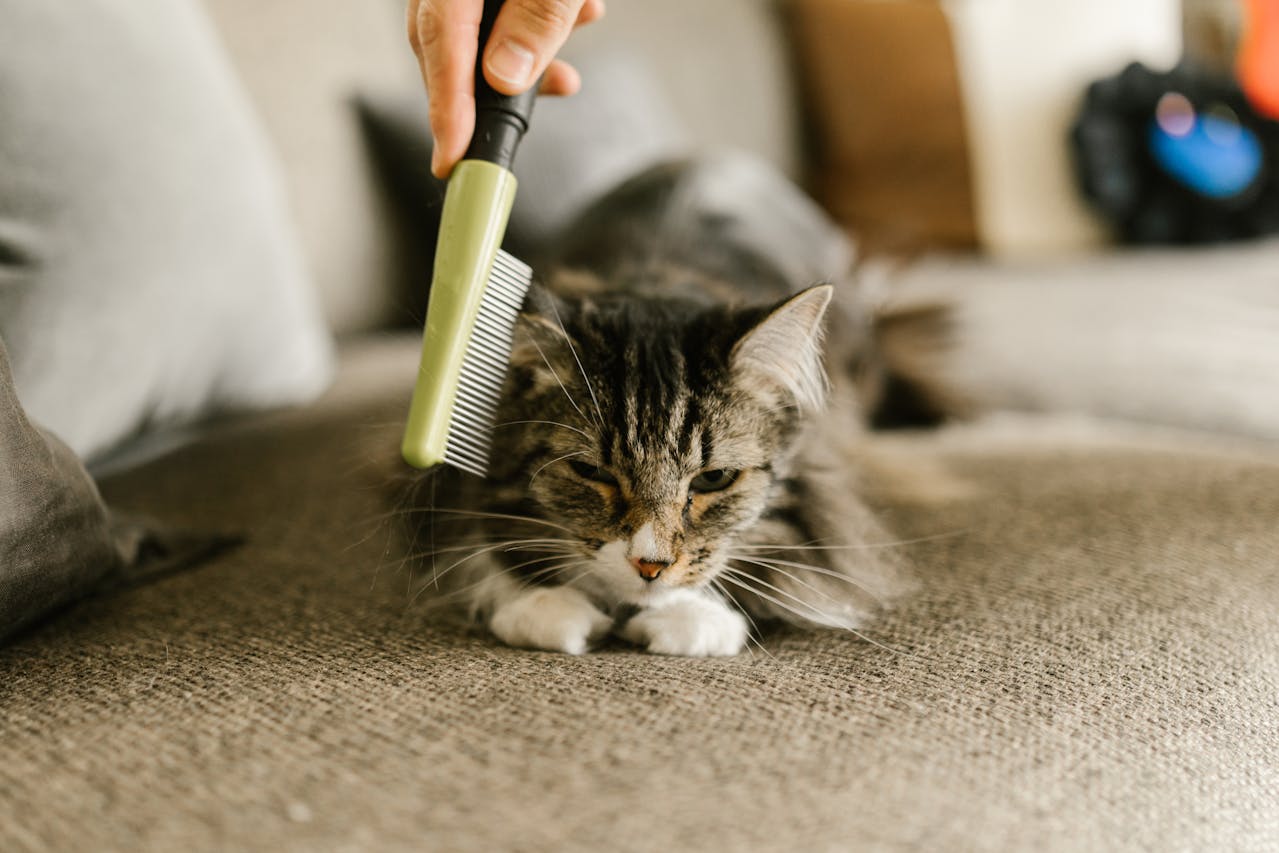
If your cat’s been scratching more than usual, biting at their skin, or you’ve seen tiny black specks in their fur or bedding, they might have fleas.
These pests are small, but they can cause big problems. Flea bites make your cat itchy and uncomfortable, and if left untreated, fleas can lead to serious issues like skin infections, flea allergy dermatitis, and even tapeworms if your cat swallows an infected flea while grooming.
If you’ve got a furry friend at home, this guide is one of those things you’ll want to stay on top of. Let’s get started!
What Are Cat Fleas?
Cat fleas or Ctenocephalides felis are small, dark brown insects that live on your cat’s skin and feed on their blood. Even though they’re tiny (about 1–3 mm long), fleas are fast and can be hard to spot. They don’t have wings, but they have strong back legs that help them jump far and high, making it easy for them to move from one animal to another.
Fleas are parasites, which means they need a host, like your cat, to survive. They bite your cat to feed on their blood. These bites can cause itching, irritation, and, in some cases, allergic reactions. In serious cases, fleas can make your cat sick, especially if the infestation is heavy or goes untreated.
Cats are easy targets because of their warm skin and thick fur, which gives fleas the perfect place to hide and lay eggs. Fleas can affect both indoor and outdoor cats, and once they get into your home, they can quickly spread.
Life Cycle of a Cat Flea
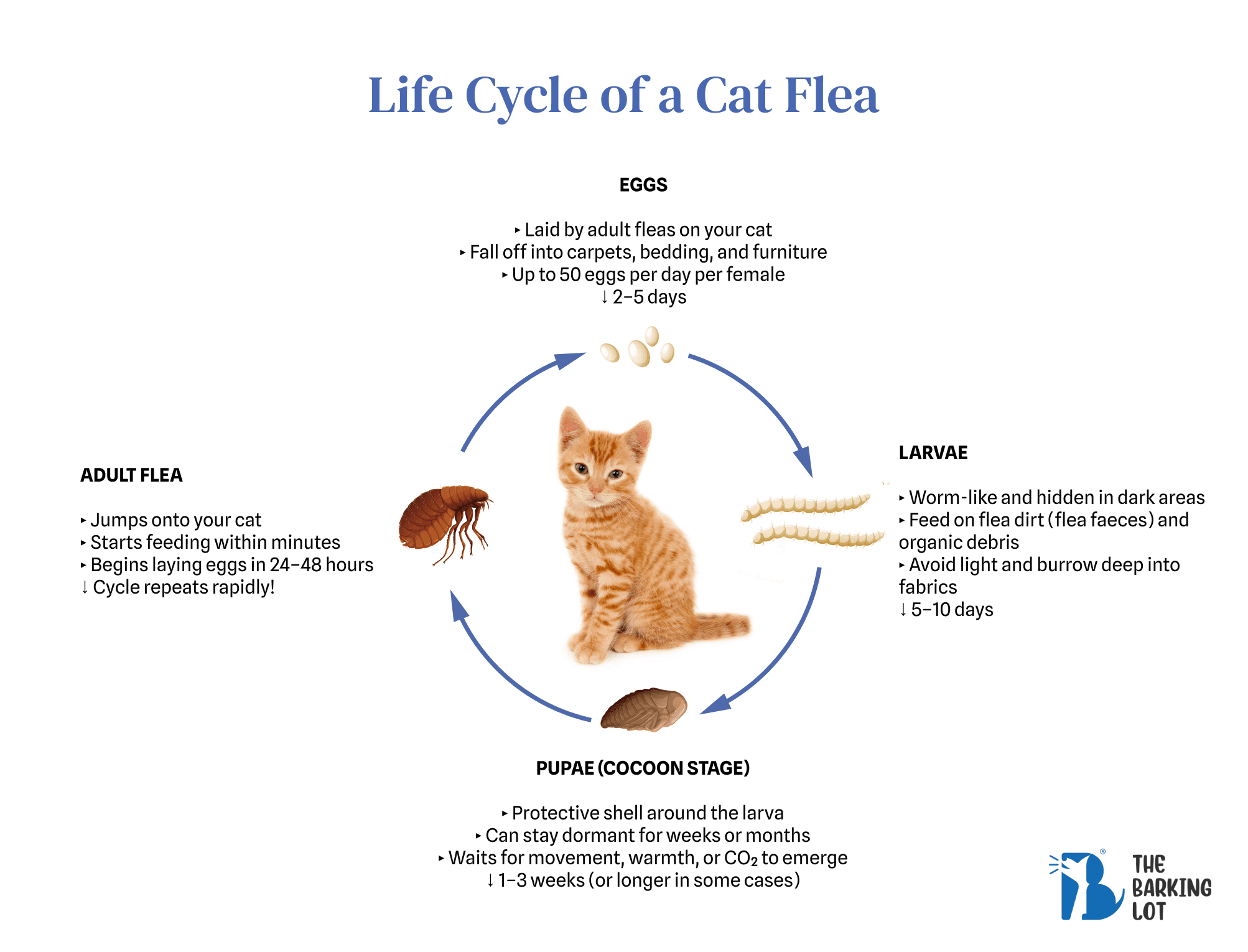
Fleas have four main life stages: egg, larva, pupa, and adult. Understanding this cycle helps explain why flea problems can grow so fast.
Eggs: After feeding on your cat’s blood, adult fleas lay up to 50 tiny white eggs a day. These eggs don’t stick to your cat; they fall off onto bedding, carpets, or furniture.
Larvae: Within a few days, the eggs hatch into larvae. These look like small worms and stay hidden in dark places. They feed on flea dirt (dried blood from adult fleas) and other organic material.
Pupae: After feeding, the larvae spin a protective cocoon and enter the pupal stage. Pupae can remain hidden for weeks or even months until they detect a host, such as your cat.
Adult Fleas: When conditions are right, adult fleas come out of the cocoon, jump onto your cat, and start feeding right away. Then, the cycle begins again.
This whole process can happen in just a few weeks. That’s why it’s so important to treat not just your cat, but also your home, to stop the fleas at every stage of their life cycle.

How Do Cats Get Fleas?
Many people think fleas are only a problem for outdoor cats, but the truth is, any cat can get fleas, even those who never leave the house. Fleas are excellent at hiding, jumping, and spreading, which means they can sneak into your home and onto your cat in ways you might not expect.
Let’s look at the most common ways cats pick up fleas:
Outdoor Exposure
If your cat spends any time outside, whether it’s roaming the garden, walking on a leash, or sunbathing on the porch, they’re more likely to pick up fleas. Outdoor areas like parks, grassy patches, bushes, and even soil can harbor flea eggs, larvae, or adult fleas waiting for a host.
Other animals, such as stray cats, dogs, or even wildlife like rats or possums, can leave fleas behind in places your cat might explore. Once fleas jump onto your cat, they start feeding quickly and lay eggs within a day or two.
Indoor Risks for House Cats
Even indoor cats aren’t safe from fleas. Fleas can hitch a ride into your home on people’s clothing, shoes, or bags, especially if you’ve been in a park, at a friend’s place with pets, or around stray animals. Fleas can also come inside with other pets in your home, like dogs, who may have picked them up outside.
Sometimes, moving into a new home or apartment where pets once lived can also expose your cat to dormant flea eggs or pupae hiding in carpets or floorboards.
Hidden Environmental Reservoirs
Once fleas get indoors, they will spread throughout your home. Flea eggs, larvae, and pupae can fall into:
Carpets and rugs (especially near baseboards)
Cat bedding and blankets
Upholstered furniture and cushions
Cracks in wooden floors or tiles
These areas act like hiding spots where fleas continue their life cycle until they’re ready to jump back onto your cat. That’s why it’s so important to treat both your cat and your home when dealing with a flea problem.
Signs Your Cat Has Fleas
Fleas can be sneaky, and sometimes your cat won’t show obvious signs until the infestation gets worse. That’s why it’s important to know what to look for early. Catching the problem sooner can help you treat it before it becomes a bigger issue.
Here are the most common signs that your cat may have fleas:
Excessive scratching or biting at the skin - especially around the neck, back, belly, or tail.
Red bumps or scabs - flea bites can cause small, itchy spots that turn into scabs from scratching.
Hair loss - due to overgrooming or allergic reactions to flea bites.
Flea dirt - tiny black specks (like ground pepper) found in your cat’s fur or bedding. This is actually flea faeces made of digested blood.
Restlessness or irritability - your cat may seem more agitated or uncomfortable than usual.
Overgrooming - licking or chewing more than normal, sometimes leading to bald patches.
If your cat has flea allergy dermatitis (FAD), even a single flea bite can cause severe itching and skin problems.
Common Areas to Check for Fleas
Fleas love warm, hidden spots on your cat’s body. When checking for fleas, focus on areas where they tend to hide:
Behind the ears
Around the neck and collar area
Base of the tail
Armpits and groin area
Belly and inner thighs
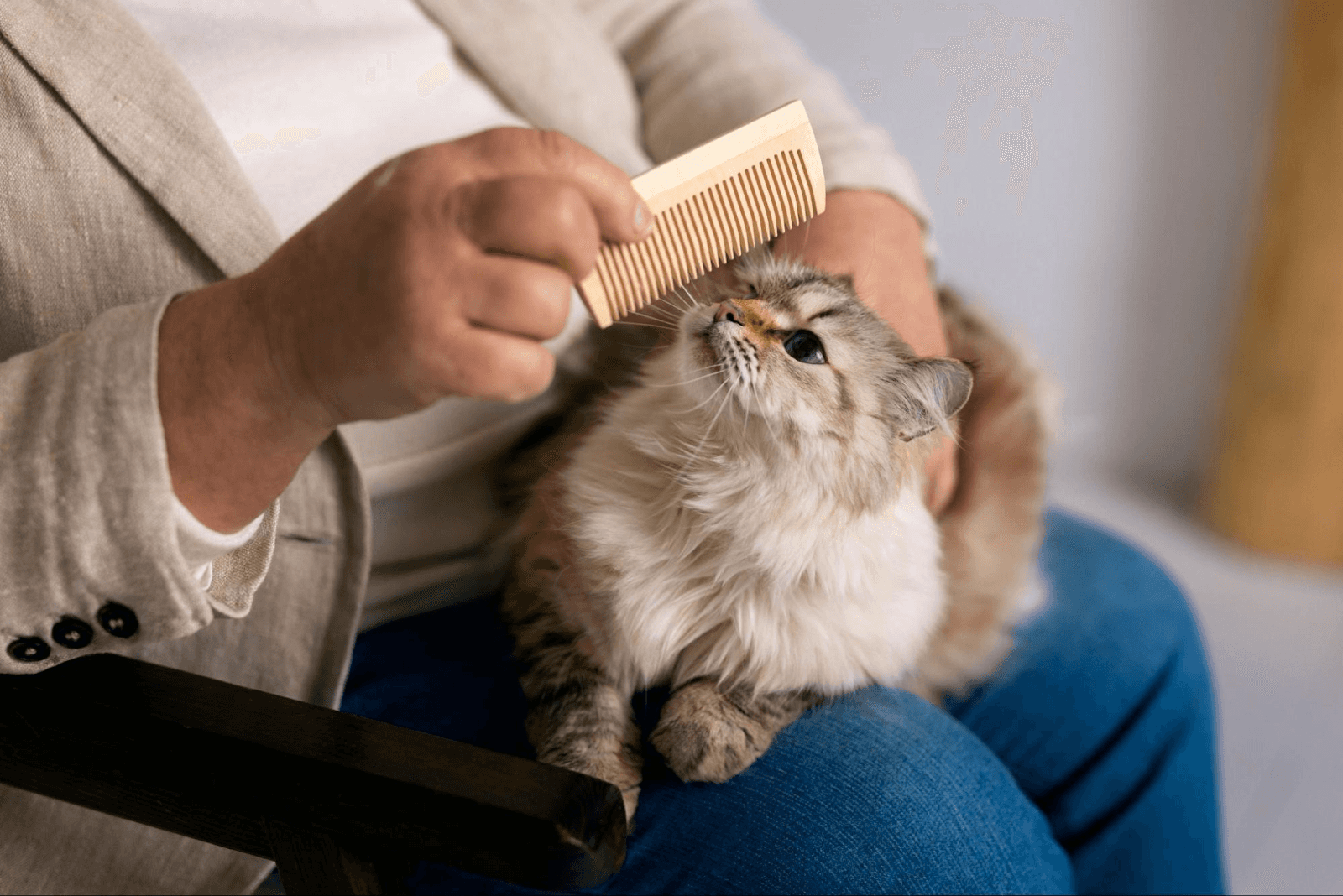
To check, part your cat’s fur gently and look closely at the skin. Use a fine-toothed flea comb to brush through these areas, especially if your cat has thick or long fur. Wipe the comb onto a damp paper towel. If you see tiny black specks that turn reddish-brown, that’s flea dirt.
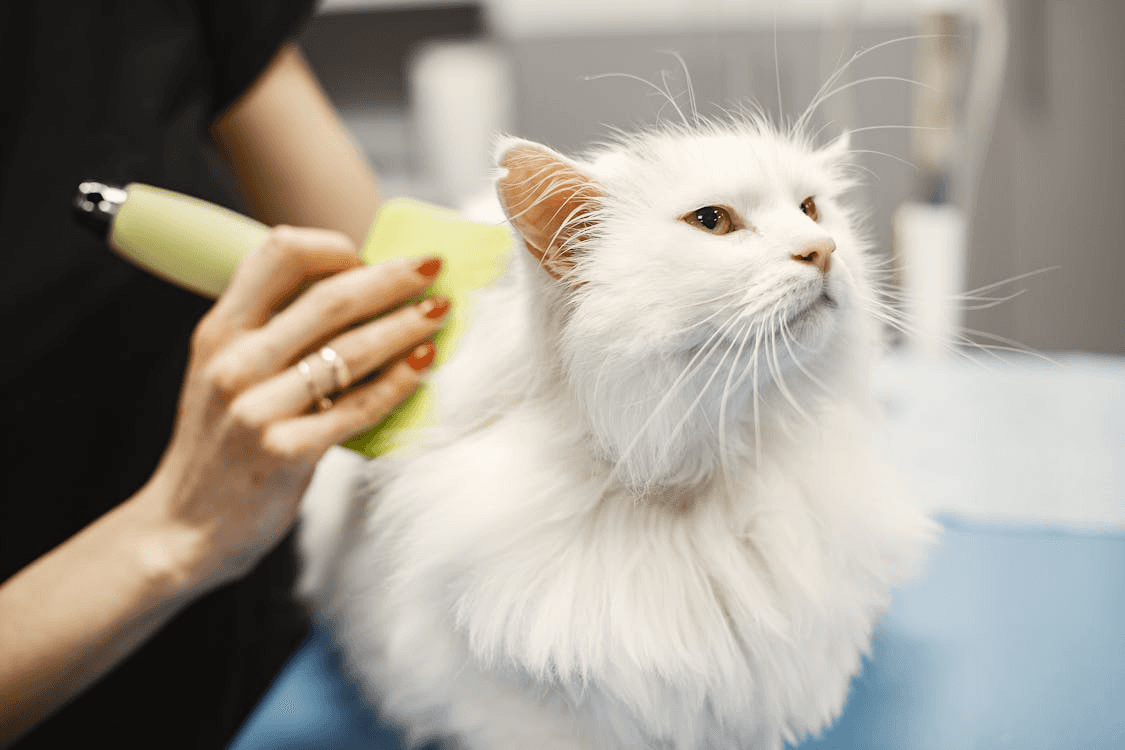
Treatment Options for Cat Fleas
If you’ve found fleas on your cat, don’t worry, there are effective ways to get rid of them. But keep in mind: treating your cat is only part of the solution. You also need to tackle the fleas hiding in your home to stop them from coming back.
There are two main parts to treatment: vet-approved products and supportive care at home. Depending on how bad the infestation is, you might need to use both together.
Vet-Approved Treatments
The quickest and safest way to deal with fleas is by using products recommended by your vet. These are specially made to kill fleas and stop their life cycle.
Here are some common vet-approved options:
Spot-on treatments - applied to the back of your cat’s neck, these kill fleas and prevent more from coming.
Oral medications - tablets that work from the inside out, killing adult fleas and sometimes eggs or larvae too.
Flea collars are long-lasting and easy to use; some can protect your cat for several months.
Prescription sprays or shampoos - these may be used for severe cases, especially for kittens or sensitive cats.
Always follow your vet’s advice and read the instructions carefully. Never use dog flea treatments on cats; they can be toxic and even deadly.
At-Home Remedies and Supportive Care
In mild cases, or as part of your overall flea plan, there are also some things you can do at home to help your cat feel better and reduce flea numbers.
Here’s what helps:
Flea combing - use a fine-toothed flea comb daily to remove fleas and flea dirt, especially around the neck, belly, and tail.
Bathing - some cat-safe flea shampoos can help wash away fleas. Use warm (not hot) water and dry your cat thoroughly.
Soothing the skin - if your cat has red or irritated skin, ask your vet about topical creams or sprays that can help relieve itching.
Boost hydration and rest – if your cat has been scratching a lot, they may be tired or stressed. Make sure they have a quiet, comfy space and plenty of water.
If your cat’s skin looks sore, they’re losing a lot of fur, or they seem weak or unwell, it’s best to speak with a vet. Some develop flea allergy dermatitis (FAD), anaemia, or even infections, so proper care for your cat is important.